 ChatGPT
 USDC payments



 50% Discount
12.64M
Any OpenAI model at 50% cheaper than OpenAI
More models and data/tools going live at discounted prices, as we onboard more suppliers to nanorouter
Price per 1M tokens
| Model |  |
|---|---|
 GPT-6 Astra | $25.0050% less vs. $50.00 at OpenAI |
| GPT-5.6 Sol | $5.0075% less vs. $20.00 at OpenAI |
| GPT-5.6 Terra | $5.0058% less vs. $12.00 at OpenAI |
| GPT-5.6 Luna | $5.00317% more vs. $1.20 at OpenAI |
| GPT-5.3 Codex Spark | $5.00 |
 OpenAI SDK
example.tsSet your endpoint and keyScroll code →
import OpenAI from "openai";
const client = new OpenAI({
baseURL: "https://api.nanorouter.ai/v1",
apiKey: process.env.NANOROUTER_API_KEY,
});
const response = await client.chat.completions.create({
model: "gpt-6-astra",
messages: [{ role: "user", content: "Hello, nanorouter." }],
max_tokens: 300,
});
console.log(response.choices[0].message.content);
All your usage, in a single dashboard.
$47.56Total spend
GPT-6 Astra59.4%$28.26
GPT-5.6 Sol13.9%$6.62
GPT-5.6 Terra11.1%$5.29
GPT-5.6 Luna9.2%$4.36
GPT-5.3 Codex Spark6.4%$3.03
10,301
36ms
GPT-6 AstraSETTLED
$0.0145USDC
- Quoted
- $0.0200
- Returned
- $0.0055
1.4K in / 300 outreq_8f2a
Just load USDC,
get LLM credits and data at highest discount possible
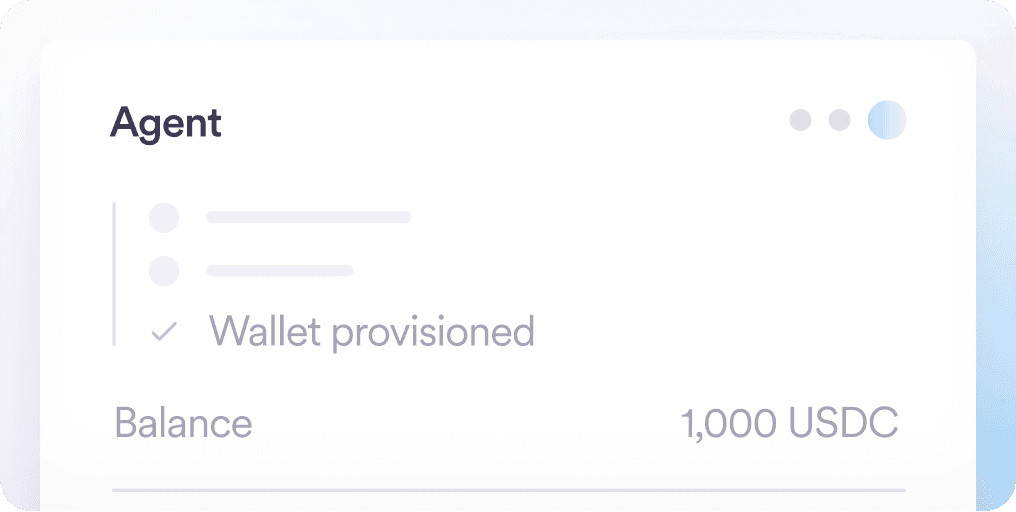
Deposit
Load USDC once. Your agent is funded, and every transaction is gasless.
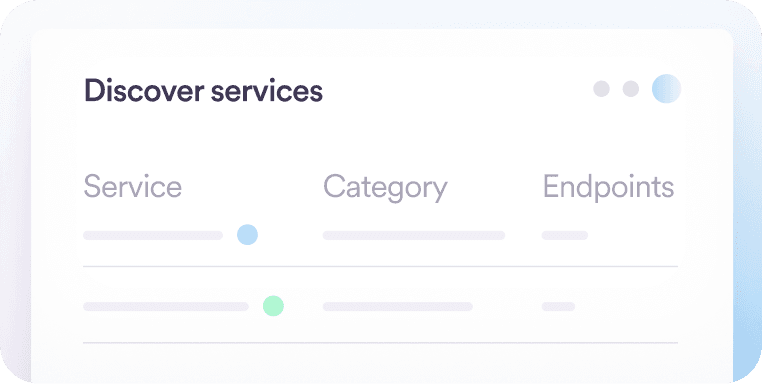
Discover
Your agent discovers resources and compares supplier prices within your spending limits.
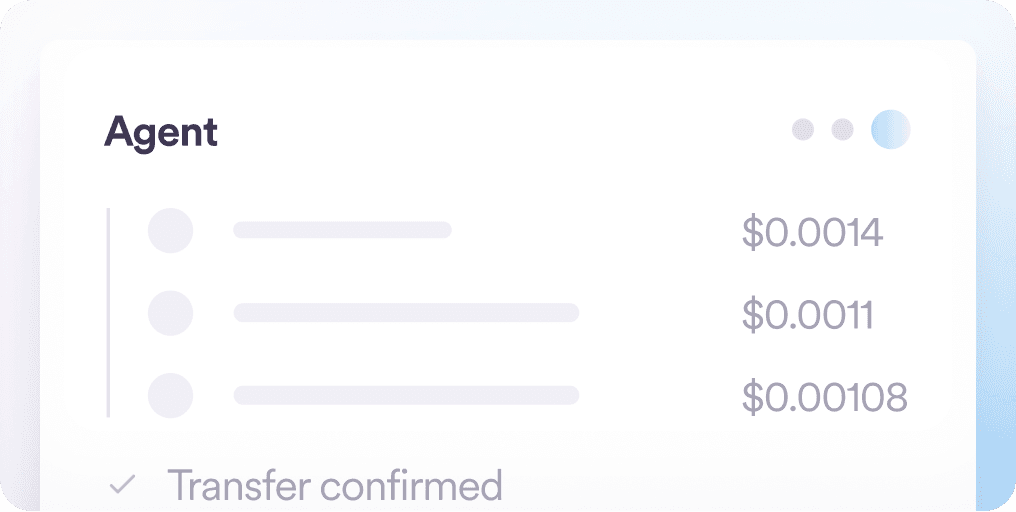
Route
nanorouter connects your agent to a supplier. Your agent gets the resource, the supplier gets paid.


Zero Data Retention or Anonymized prompts or data requests depending on the supplier
Privacy First
Opt-in incognito mode for your Payments Powered by Arc from Circle

What is nanorouter?
nanorouter is a marketplace where agents and applications discover and pay for machine resources in USDC, starting with AI inference
How do I get started?
Connect your wallet, create an API key, and load USDC into your Circle Gateway balance. Your agent can then use that balance to pay for supported services
What does it cost?
Per-million-token rates are published for every model and charged per request. There is no subscription, minimum, or monthly commitment. The live price list is available from GET /v1/models without an API key.
What do I change in my code?
Only the base URL and API key. nanorouter speaks the OpenAI Chat Completions API, so existing OpenAI-compatible clients, including LangChain and the Vercel AI SDK, keep working.
How are requests paid for?
Each request is quoted against your USDC balance before it runs, then metered using the actual input and output tokens. nanorouter handles the payment flow and returns the inference result.
What happens to money I don’t spend?
It comes back. The unused part of a request’s quote is refunded as credit as soon as the request settles, then applied to your next quote. Unspent credit is withdrawable.
Can I control my agent’s spending?
Yes. Give each API key a spending limit, an expiry date, or both. If a request’s quote is above the remaining allowance, it is refused before the model runs.
What if a model is down?
Models in the catalogue are checked continuously and deactivated after repeated failures, then restored after recovery. A request that fails before producing output is refunded in full.
Do you store prompts or responses?
The paid API does not store prompt or response text. Its ledger records the model, token counts, charge, status, and timestamps. Dashboard chat history is a separate feature stored under your account.
Which networks can I fund from?
You can send USDC from Arc, Solana, Base, Arbitrum, OP Mainnet, Polygon, Ethereum, Avalanche, Unichain, Linea, World Chain, and HyperEVM. It is swept into your balance automatically.
What resources can I access?
AI inference is live today. nanorouter is designed to grow into a broader marketplace for paid APIs and other machine-readable resources.
What isn’t supported yet?
The API is text-only and returns one completion per call. It currently supports /v1/chat/completions and /v1/models; image, audio, embeddings, legacy completions, and the Responses API are not available yet.